The cosmetics industry has experienced remarkable growth over the last decade. At the same time, counterfeit beauty products have become one of the biggest challenges for manufacturers, distributors, and retailers. Fake skincare products and imitation cosmetics no longer affect only luxury brands. Today, even small and mid-sized cosmetic companies are facing the risk of copied products entering the market.
This is where Anti Counterfeit Solutions for Cosmetics Industry have become essential rather than optional. Modern authentication technologies help brands verify product authenticity, protect their reputation, and improve customer confidence.
From working with clients across different industries, I have noticed that many businesses focus heavily on product marketing but overlook product protection. Unfortunately, by the time counterfeit products appear in the market, the damage to customer trust has already begun. Therefore, investing in cosmetic product authentication from the beginning is often more cost-effective than trying to recover a damaged brand image later.
Why Counterfeit Cosmetics Are a Serious Business Problem
Counterfeit cosmetics are more than fake packaging. In many cases, they contain unsafe ingredients, poor-quality formulations, or harmful chemicals that can cause serious skin problems. Although customers unknowingly purchase these products, they usually blame the original brand when issues arise.
As a result, companies may experience:
- Loss of customer trust
- Revenue decline
- Increased product complaints
- Legal complications
- Damage to long-term brand reputation
Based on real implementation experience, brands often underestimate how quickly counterfeit products spread through online marketplaces and unauthorized sellers. Even companies with strong retail networks are not immune to this problem.
Moreover, counterfeiters have become increasingly sophisticated. Many fake products now closely resemble original packaging, making it difficult for customers to identify genuine items without a reliable verification method.
How Anti Counterfeit Solutions Protect Cosmetic Brands
Modern Anti Counterfeit Technology for Cosmetics combines digital security with physical packaging features to create multiple layers of protection. Instead of relying on traditional holograms alone, companies now use smart authentication systems that verify every product individually.
The most effective solutions usually include:
- QR Code Product Verification
- Unique serial numbers
- Secure product identifiers
- Cloud-based authentication
- Mobile verification platforms
- Supply chain tracking
When these technologies work together, businesses can identify suspicious products much earlier while giving customers an easy way to verify authenticity.
One common mistake companies make is relying on only one security feature. Counterfeiters often copy visible packaging elements within months. However, digital verification backed by secure databases is significantly more difficult to duplicate.
QR Code Product Verification Is Changing Product Authentication
Among today’s authentication methods, QR Code Product Verification has become one of the most practical solutions for cosmetic brands.
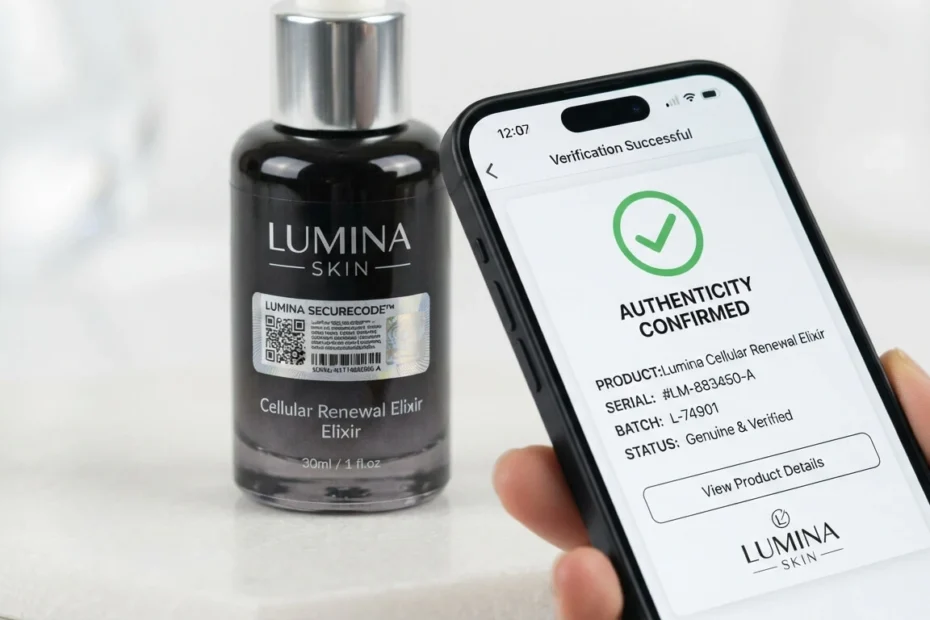
Every product receives a unique QR code connected to a secure database. Customers simply scan the code using their smartphone to confirm whether the product is genuine.
The process is simple:
- Customer scans the QR code.
- The system checks the unique product identity.
- Authentication results appear instantly.
- The customer receives confirmation that the product is genuine.
Besides verifying products, QR code authentication provides valuable business intelligence.
For example, brands can monitor:
- Where products are being scanned
- Frequency of verification
- Geographic sales trends
- Suspicious duplicate scans
- Consumer engagement
From working with authentication projects, I have seen companies discover unauthorized distribution channels simply by analyzing QR scan locations. Without digital verification, identifying these issues would have taken months.
The Role of Cosmetic Product Authentication in Building Consumer Trust
Today’s customers expect transparency before making purchasing decisions. They want assurance that the products they apply to their skin are safe and authentic.
A reliable Cosmetics Authentication System helps brands provide exactly that confidence.
Instead of asking customers to trust marketing claims, businesses allow them to verify authenticity themselves.
This creates several advantages:
- Higher customer confidence
- Stronger brand loyalty
- Better purchase experience
- Reduced customer complaints
- Improved online reputation
In my experience, customer trust is one of the most valuable assets a cosmetic company can build. Once customers realize they can authenticate products within seconds, they are much more likely to purchase again.
Furthermore, authentication systems also support customer education. Brands can display product instructions, ingredient information, warranty details, and promotional campaigns immediately after verification.
As a result, authentication becomes both a security tool and a customer engagement platform.
Anti Counterfeit Packaging Adds Another Layer of Security
Packaging remains the first line of defense against counterfeit products. However, traditional security labels alone are no longer sufficient.
Modern Anti Counterfeit Packaging combines physical protection with digital authentication technologies.
Common security features include:
- Tamper-evident seals
- Secure QR codes
- Hidden authentication layers
- Unique serialization
- Security labels
- Scratch-to-verify codes
What works best in practice is combining several security methods instead of depending on one solution.
For example, a cosmetic brand may use tamper-proof packaging together with QR code authentication and cloud-based verification. Even if counterfeiters successfully copy the box design, they cannot easily duplicate the secure digital identity assigned to each product.
This layered approach significantly strengthens cosmetic product security while making imitation much more difficult for counterfeit manufacturers.
Why Product Traceability Matters More Than Ever
Product authentication does not stop after manufacturing. Businesses also need visibility throughout the supply chain.
Product traceability allows brands to monitor products from production to the final customer. Consequently, companies gain better control over inventory movement, distributor activities, and retail distribution.
In many authentication projects, I have found that counterfeit products often enter the market through unauthorized supply channels rather than directly copying factory shipments.
Therefore, combining authentication with product traceability and supply chain transparency enables businesses to detect unusual product movement much earlier, reducing financial losses and protecting both customers and brand reputation.
How to Implement Anti Counterfeit Solutions for Cosmetics Industry
Many companies believe they need a large budget to secure their products. In reality, the best approach is to implement anti-counterfeit measures in phases. This keeps costs manageable while delivering long-term value.
Based on real implementation experience, businesses that plan their authentication strategy before launching a product usually achieve better results than those reacting after counterfeit products appear in the market.
A practical implementation roadmap looks like this:
1. Assess Your Counterfeit Risk
Start by identifying where your products are most vulnerable.
Consider questions such as:
- Which products sell the most?
- Which regions experience the highest counterfeit activity?
- Which sales channels are difficult to monitor?
- Are unauthorized resellers affecting your brand?
A risk assessment helps prioritize products that require immediate protection.
2. Choose the Right Authentication Technology
Different brands require different levels of security.
Popular options include:
- QR Code Product Verification
- Serialized product codes
- Scratch-to-verify labels
- Secure digital identities
- Mobile Product Verification
- Cloud-based Cosmetics Authentication System
For most cosmetic brands, QR code authentication offers the best balance between affordability, ease of use, and security.
3. Secure Your Packaging
Authentication should begin before the product reaches customers.
Effective Anti Counterfeit Packaging includes:
- Tamper-evident seals
- Secure labels
- Hidden security features
- Serialized QR codes
- Unique packaging identifiers
This combination makes duplication significantly more difficult.
4. Educate Customers
Even the best authentication system delivers limited value if customers do not know how to use it.
One common mistake companies make is placing a QR code on packaging without explaining its purpose.
Instead, encourage customers to:
- Scan before opening the product.
- Verify authenticity before purchase.
- Report suspicious products.
- Buy only from authorized sellers.
Simple instructions can dramatically increase customer participation.
Common Mistakes Cosmetic Brands Should Avoid
After working with product authentication projects, I have noticed several recurring mistakes that reduce the effectiveness of security initiatives.
Depending Only on Packaging
Many businesses assume attractive packaging is enough. Unfortunately, counterfeiters can copy packaging surprisingly quickly.
Digital authentication should always complement physical security.
Delaying Authentication Until Problems Occur
Some brands wait until counterfeit products affect sales.
By then, rebuilding consumer trust becomes much harder than preventing the problem in the first place.
Ignoring Supply Chain Visibility
Authentication should not end at manufacturing.
Without product traceability and supply chain transparency, counterfeit products can enter distribution unnoticed.
Choosing Complicated Verification Methods
Customers expect quick verification.
If authentication takes several minutes or requires multiple apps, many users simply will not complete the process.
The easier the experience, the higher the verification rate.
Best Practices for Long-Term Beauty Brand Protection
Successful authentication is not a one-time project. It is an ongoing strategy that evolves alongside new counterfeiting techniques.
The following practices consistently deliver strong results:
- Assign a unique digital identity to every product.
- Use secure QR Code Authentication instead of static QR codes.
- Monitor scan data regularly for suspicious activity.
- Audit distributors and retail partners.
- Update packaging security features periodically.
- Educate customers through marketing campaigns.
- Integrate authentication with inventory and supply chain systems.
- Analyze verification reports to identify counterfeit hotspots.
- Encourage customers to report suspicious products.
- Continuously improve authentication based on real-world insights.
From working with clients, I have learned that companies achieving the greatest success treat authentication as part of their overall digital transformation strategy rather than simply a security expense.
The Future of Anti Counterfeit Technology for Cosmetics
Technology continues to reshape product authentication.
Today’s cosmetic brands are moving beyond basic verification toward intelligent authentication platforms that provide real-time insights.
Future trends include:
- AI-powered counterfeit detection
- Blockchain-enabled product traceability
- Smart packaging
- Digital product passports
- Advanced mobile product verification
- Real-time supply chain monitoring
- Predictive fraud analytics
These innovations will not only improve security but also strengthen customer relationships through greater transparency and engagement.
Businesses that invest early in these technologies will be better prepared for future market challenges while maintaining a competitive advantage.
FAQs
Anti counterfeit solutions are technologies and security measures that help cosmetic brands prevent fake products by verifying authenticity through QR codes, serialization, secure packaging, and digital authentication systems.
Each cosmetic product receives a unique QR code linked to a secure database. Customers scan the code using their smartphone to instantly verify whether the product is genuine.
Cosmetic Product Authentication protects customers from counterfeit beauty products, strengthens brand reputation, reduces fraud, and improves consumer confidence.
Yes. Modern authentication platforms are scalable and affordable. Even small and growing brands can start with QR code verification and expand as their business grows.
Anti counterfeit packaging helps prevent product tampering, discourages counterfeiters, supports digital verification, and provides an additional layer of product security.
Product traceability tracks products throughout the supply chain, allowing brands to identify unauthorized distribution channels and detect suspicious product movement before counterfeit goods reach consumers.
For most businesses, combining QR Code Product Verification, secure serialization, cloud-based authentication, and anti counterfeit packaging provides the highest level of protection while remaining easy for customers to use.
Conclusion
Counterfeit cosmetics continue to threaten both consumer safety and brand reputation. As counterfeiters become more sophisticated, relying on traditional security labels is no longer enough. Businesses need smarter, data-driven solutions that combine Anti Counterfeit Technology for Cosmetics, Cosmetic Product Authentication, secure packaging, and QR Code Product Verification to stay ahead.
Based on real implementation experience, the brands that achieve the best results are those that view authentication as more than a security feature. They use it to build customer trust, improve supply chain visibility, gain valuable business insights, and create stronger relationships with consumers. A well-designed authentication strategy not only protects products but also strengthens long-term business growth.
If you’re looking to safeguard your cosmetic products with a reliable Cosmetics Authentication System, AuthX offers advanced product verification, secure QR code authentication, and brand protection solutions tailored to modern businesses. Backed by the digital transformation expertise of Eyecon Consultant, your business can implement scalable anti-counterfeit technologies that protect your brand, enhance customer confidence, and support sustainable growth. Contact AuthX today to discover how intelligent authentication can secure your products and your reputation.