Knowing how to detect fake products is important for protecting consumers and businesses. From cosmetics and food items to medicines and electronics, counterfeit products can affect customer safety, damage brand reputation, and cause financial losses.
By checking product packaging, labels, batch numbers, QR codes, and seller details, you can identify potential warning signs before buying or using a product.
In this guide, you will learn practical ways to identify fake products and understand how product verification technology can help protect consumers and brands.
Check the Product Packaging Carefully
One of the easiest ways to detect fake products is to inspect the packaging. Genuine products usually have consistent printing, clear labels, accurate spelling, and good-quality packaging.
Look for these warning signs:
- Spelling mistakes or poorly printed text.
- Broken seals or damaged packaging.
- Missing manufacturer details.
- Different colours, logos, or designs compared with the official product.
- Missing batch numbers, expiry dates, or required product information.
Verify the Barcode, QR Code, and Product Details
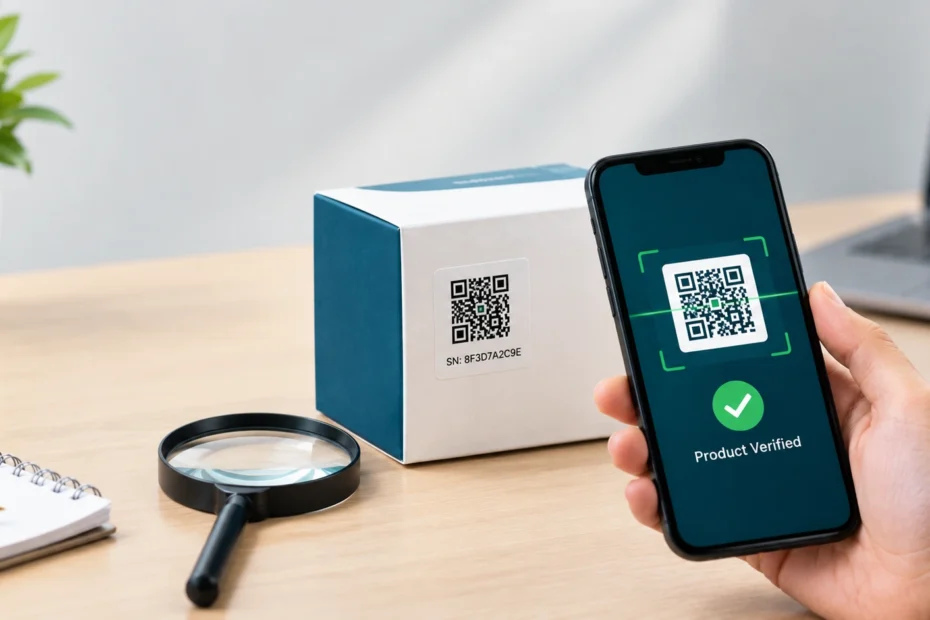
Check the barcode, QR code, serial number, or product identification details when these are available. Some brands provide official verification tools that allow customers to check product information.
When scanning a QR code, make sure it opens the expected official website or verification page. Check whether the displayed product name, brand, and other details match the item you purchased.
Be careful: a barcode or QR code alone does not prove that a product is genuine. Counterfeiters may copy codes from authentic products. Use the brand’s official verification system whenever possible.
Check the Manufacturer and Seller Information
Before purchasing a product, review the manufacturer’s name, contact details, and official website. Buy from authorised sellers or trusted retailers whenever possible.
You should also compare the product details with information published by the brand. If the seller cannot provide basic product information, the price seems unusually low, or the product description contains inconsistencies, investigate further before buying.
For medicines and other regulated products, follow the guidance provided by the Drug Regulatory Authority of Pakistan (DRAP) and purchase through legitimate, authorised channels.
Compare Prices and Product Quality
A price that is significantly lower than the usual market price can be a warning sign, particularly when the seller is unknown. However, discounts alone do not mean a product is counterfeit.
Compare the product’s price, packaging, features, and quality with information from the manufacturer’s official website. Pay attention to unusual smells, inconsistent colours, poor finishing, or missing accessories where relevant.
If you suspect a product is fake, avoid using it when it may pose a safety risk. Contact the seller or manufacturer for guidance and report the issue to the appropriate authority when necessary.
Use Product Authentication Technology
Product authentication technology helps brands provide customers with additional ways to check product information and authenticity.
Depending on the system, a brand may use unique QR codes, product identification numbers, digital records, or verification pages. Customers can scan or enter the available details to check the information provided by the brand.
For businesses, these systems can support product traceability, improve customer confidence, and help identify suspicious verification activity. The level of protection depends on how the system is designed and implemented.
A verification result should always be assessed in context. A copied QR code or misleading website can still create confusion, so customers should use trusted, official verification channels.
Frequently Asked Questions
How can I tell if a product is fake?
Can a QR code prove that a product is genuine?
What should I do if I buy a counterfeit product?
Are cheap products always fake?
Why is product authentication important?
Final Thoughts
Learning how to detect fake products helps consumers make more informed purchasing decisions. Checking packaging, reviewing seller information, comparing product details, and using official verification tools can help identify potential warning signs.
For businesses, product authentication technology offers another way to support product verification and strengthen customer trust. The right approach combines reliable verification methods with clear product information and trusted sales channels.
Want to learn more about product verification and brand protection? Explore AuthX to learn how QR-based product verification and digital warranty solutions can help businesses protect their products and customers.