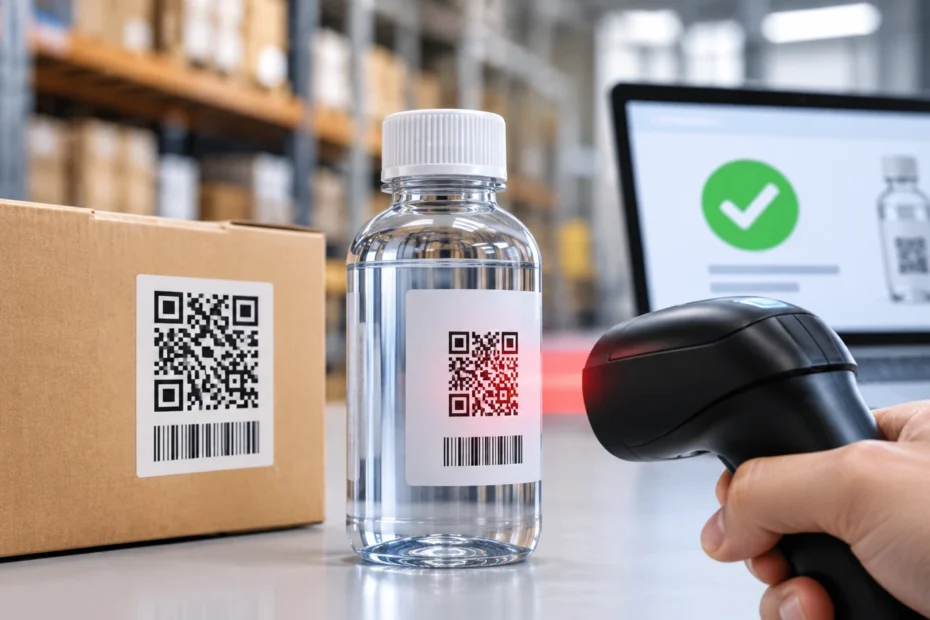
Two products may look identical on a shelf, but how can a business tell them apart? The product serialization process gives each individual product a unique identity, helping businesses connect physical items with digital records throughout the supply chain.
Unlike a batch number, which identifies a group of products, a serial number can identify one specific item. As a result, businesses can improve product traceability, manage records, and help customers check product authenticity.
What Is Product Serialization?
Product serialization is the process of assigning a unique identifier to each individual product and linking it to a digital record.
That identifier may appear as a barcode, QR code, or another machine-readable code based on GS1 standards. When connected to a suitable system, it can help businesses retrieve relevant product information.
For example, a cosmetics manufacturer can assign a unique code to every bottle in a production run. Although the bottles share the same product name and batch, each bottle has its own identity.
How Does the Product Serialization Process Work?
The process connects a product’s identity with its information at different stages.
1. Create a Unique Product Identity
First, the system generates a unique serial number for each individual item. The business records relevant information, such as the product reference and manufacturing details.
2. Apply the Code to the Product
Next, the manufacturer prints or applies the identifier to the product, label, or packaging. A QR code or barcode can make the identifier easier to scan.
3. Connect the Code to Digital Records
The system links the identifier to its corresponding product record. Depending on the setup, this record may include the product name, batch number, manufacturing date, and other relevant details.
4. Record Product Movement
As the product moves through distribution, businesses can record relevant events, such as dispatch, receipt, or transfer. However, serialization alone does not automatically track every movement; the system must capture those events.
5. Verify the Product
Finally, an authorized business user or customer can scan the code to retrieve the information made available to them. A verification system can use this information to help assess whether the product matches its expected record.
Product Serial Number vs. Batch Number vs. QR Code
These terms serve different purposes, even though businesses often use them together.
| Identifier | What it identifies | Example |
|---|---|---|
| Serial number | One individual product | Bottle 000145 |
| Batch number | A group made under a production run | Batch B2408 |
| QR code | A scannable way to access encoded information or a linked record | Code printed on a package |
A QR code can carry a serial number or provide access to a digital record. However, a QR code by itself does not guarantee authenticity because counterfeiters can copy printed codes.
Why Does Product Serialization Matter?
Product serialization helps businesses build more reliable product records and improve visibility across their operations.
- Product traceability: Connect individual items with relevant production and distribution records.
- Counterfeit risk management: Support verification checks that help identify suspicious or mismatched product records.
- Inventory control: Distinguish individual items when the system and operational process support item-level tracking.
- Recall management: Help identify affected products when serial numbers connect to accurate batch and distribution records.
- Customer confidence: Give customers access to relevant verification information through a suitable system.
However, these benefits depend on accurate records, secure identifiers, and a process that staff and partners follow consistently.
Where Is Product Serialization Used?
The process is useful wherever businesses need to distinguish individual products and connect them with reliable records.
- Pharmaceuticals: Connect medicine packs with product identifiers and compliance records, such as those required under the US Drug Supply Chain Security Act.
- Cosmetics: Help customers and businesses check product information and authenticity.
- Electronics: Identify individual devices for warranty, service, and inventory records.
- Food and beverages: Link packaged products with batch information and selected production records.
- Luxury goods: Support product verification and brand protection efforts.
The exact requirements vary by industry, market, and applicable regulations. Businesses should confirm the rules that apply to their products before implementation.
Product Serialization and Product Verification: What's the Difference?
Serialization creates a unique identity for an individual product. Verification checks information associated with that identity to help determine whether the product matches an expected record.
In other words, serialization provides the identity, while verification uses that identity to support a check.
For stronger protection, businesses can combine unique identifiers with secure digital records, controlled code issuance, and checks that flag duplicate or suspicious scans.
Explore the AuthX Product Verification Solution to see how product identity and digital verification can support brand protection.
Best Practices for Implementing Product Serialization
Before introducing serialization, businesses should establish a clear process.
- Assign unique identifiers: Prevent accidental reuse of serial numbers across individual products.
- Maintain accurate records: Keep product and batch information consistent with the physical item.
- Protect code generation: Restrict access to serial number creation and management.
- Test scanning: Confirm that codes remain readable after printing, packaging, storage, and handling.
- Plan for verification: Decide what information customers, distributors, and internal teams can access.
- Monitor suspicious activity: Review repeated scans and unusual verification patterns where the system supports them.
Most importantly, serialization should fit the company’s manufacturing, distribution, and customer service workflows rather than operate as an isolated database.
Frequently Asked Questions
It is the process of assigning a unique identifier to each individual product and linking it to a digital record that can support identification and traceability.
No. A serial number identifies an individual item, while a batch number identifies a group of products associated with the same production batch.
No. A QR code can be copied. Reliable verification requires suitable digital records and checks that help detect copied codes, duplicate scans, or mismatched product information.
It can help businesses identify suspicious products and support authenticity checks. However, serialization works best alongside secure code management, reliable records, and appropriate verification controls.
Requirements depend on the product category, destination market, and applicable regulations. Businesses should consult the relevant regulatory authority or qualified compliance adviser before deciding what they need to implement.
Conclusion
The product serialization process gives every individual product a distinct identity and connects it with relevant digital records. When implemented correctly, it can support traceability, inventory management, product verification, and better-informed customers.
However, assigning a serial number is only the first step. Accurate records, secure identifiers, and reliable verification are what make the process useful.
Looking to connect product identity with digital verification? Explore the AuthX Product Verification Solution to learn how your business can support product authenticity checks and strengthen brand protection.