Counterfeit products are no longer limited to luxury brands. Today, industries like pharmaceuticals, cosmetics, electronics, food, and agriculture all face the growing challenge of fake products. These counterfeits not only reduce revenue but also damage customer trust and brand reputation.
If you’re wondering What is Anti Counterfeit Technology, you’re asking one of the most important questions for modern businesses. In my experience, companies that invest in product authentication early avoid significant financial losses and build stronger customer confidence. This guide explains how Anti Counterfeit Technology works, why it matters, and how it helps protect brands in today’s competitive market.
What Is Anti Counterfeit Technology?
Anti Counterfeit Technology refers to the tools and security methods used to verify that a product is genuine. It combines digital and physical technologies to prevent fake products from entering the supply chain and reaching customers.
Instead of depending on ordinary labels, businesses use secure authentication methods such as:
- QR Code Authentication
- Product Serialization
- RFID Tags
- NFC Chips
- Hologram Security Labels
- Tamper-Evident Packaging
From working with manufacturers, I’ve found that combining multiple security layers is far more effective than using a single authentication method. A strong Product Authentication Technology strategy makes products much harder to copy and easier to verify.
Why Do Brands Need Anti Counterfeit Technology?
Counterfeit products do much more than reduce sales. They can permanently damage a company’s reputation, increase warranty claims, and put customers at serious risk. According to INTERPOL’s work on counterfeit goods, counterfeit trade is a global challenge that affects businesses, governments, and consumers alike .
One common mistake companies make is believing counterfeiting only affects large global brands. However, we’ve worked with businesses of all sizes that faced counterfeit problems once their products became popular. Investing in Brand Protection Technology early helps businesses stay ahead of counterfeiters.
Key benefits include:
- Protects brand reputation.
- Builds customer trust.
- Reduces revenue loss.
- Improves supply chain visibility.
- Supports regulatory compliance.
- Identifies counterfeit products quickly.
A proactive approach always costs less than recovering from the damage caused by counterfeit goods.
How Does Anti Counterfeit Technology Work?
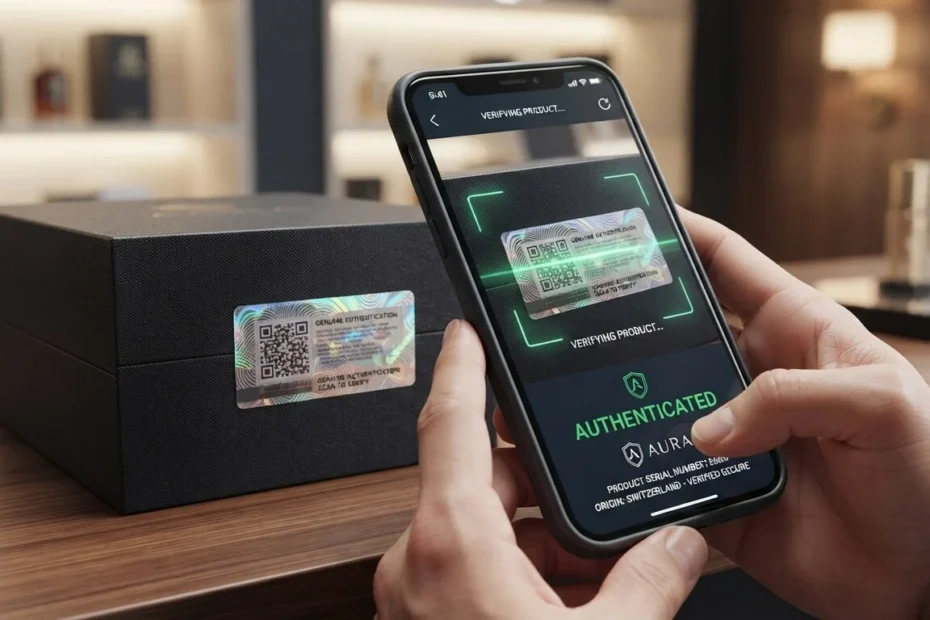
Modern Anti Counterfeit Solutions assign every product a unique digital identity. This identity is linked to a secure cloud database that stores authentication information. Customers, retailers, and distributors can verify products instantly using a smartphone or dedicated scanning device.
The verification process is simple:
- A unique code is generated for every product.
- The code is printed as a QR code, barcode, RFID tag, or NFC chip.
- The customer scans the product.
- The system verifies the product in real time.
- Authentication data is recorded for future analysis.
Based on real implementation experience, businesses gain more than product security. Every verification provides valuable insights into customer behavior, product movement, and suspicious market activity, allowing companies to strengthen both security and operational efficiency.
Why QR Code Authentication Is Becoming the Preferred Choice
Among today’s authentication methods, QR Code Authentication has become one of the most practical and cost-effective solutions. It requires minimal hardware, is easy for customers to use, and integrates seamlessly with cloud-based verification platforms.
In my experience, businesses prefer QR-based Product Verification Systems because they offer more than authentication. Every scan provides useful data about product location, customer engagement, and distribution patterns. This information helps brands detect counterfeit activity early while improving supply chain transparency and customer trust.
Types of Anti Counterfeit Technology
No single solution can completely stop counterfeit products. Instead, businesses should choose the right mix of technologies based on their products, industry, and supply chain. In my experience, a layered security approach delivers the best results because it creates multiple barriers for counterfeiters.
Here are the most widely used Anti Counterfeit Solutions:
QR Code Authentication
Every product receives a unique QR code linked to a secure database. Customers can scan the code to verify authenticity within seconds.
Product Serialization
Each product is assigned a unique serial number, making it easier to track products throughout the supply chain and detect fake items.
RFID & NFC Technology
RFID tags and NFC chips provide secure, contactless authentication. They are commonly used in pharmaceuticals, electronics, and luxury products.
Tamper-Evident Packaging
Security seals and specialized packaging reveal whether a product has been opened or altered before reaching the customer.
Benefits of Anti Counterfeit Technology
Implementing Brand Protection Technology offers more than just product security. It helps businesses improve customer confidence, streamline operations, and make better decisions using real-time verification data.
Some of the biggest benefits include:
- Protects your brand reputation.
- Prevents counterfeit products.
- Builds long-term customer trust.
- Improves supply chain transparency.
- Reduces financial losses.
- Supports regulatory compliance.
- Provides valuable product verification insights.
- Enhances customer engagement through QR Code Authentication.
From working with clients, I’ve found that businesses often discover valuable market insights through authentication data that would otherwise remain hidden.
Industries That Benefit Most
Counterfeit products affect almost every industry today. However, businesses selling high-value or safety-critical products should prioritize Product Authentication Technology to reduce risk and maintain customer confidence.
Industries that benefit the most include:
- Pharmaceutical Manufacturers
- Cosmetics & Skincare Brands
- Food & Beverage Companies
- Electronics Manufacturers
- Automotive Parts Suppliers
- Fashion & Luxury Brands
- Agriculture & Fertilizer Companies
- Consumer Goods Manufacturers
As counterfeit products continue to evolve, these industries increasingly rely on digital authentication rather than traditional security labels.
Common Mistakes Businesses Make
Many companies only think about counterfeiting after they start losing customers or revenue. Unfortunately, waiting until problems arise often leads to higher costs and damaged brand credibility.
One lesson I’ve learned over the years is that successful Counterfeit Prevention Technology requires both technology and awareness.
Avoid these common mistakes:
- Relying on a single security feature.
- Ignoring distributor verification.
- Not educating customers.
- Failing to monitor authentication reports.
- Delaying investment in product security.
- Choosing low-cost solutions with limited protection.
Businesses that continuously monitor authentication data are far better equipped to detect suspicious activity before it becomes a major issue.
Frequently Asked Questions
Anti Counterfeit Technology uses digital and physical security methods to verify genuine products and prevent counterfeit goods from entering the market.
Each product receives a unique QR code. Customers scan the code using a smartphone to verify authenticity through a secure cloud-based system.
It protects brand reputation, improves customer trust, prevents financial losses, and strengthens supply chain security.
Pharmaceuticals, cosmetics, food, electronics, automotive, fashion, agriculture, and manufacturing industries commonly use these solutions.
A combination of QR Code Authentication, Product Serialization, RFID/NFC, and a cloud-based Product Verification System offers the strongest protection against counterfeit products.
Conclusion
Understanding What Is Anti Counterfeit Technology? How It Protects Brands is essential for businesses that want to protect their products, customers, and reputation. By implementing solutions like QR Code Authentication and a secure Product Verification System, businesses can prevent counterfeit products, strengthen customer trust, and improve supply chain security.
Looking to safeguard your brand? AuthX, powered by Eyecon Consultant, offers advanced anti-counterfeit and product authentication solutions tailored to your business needs. Visit Authx to explore our solutions or contact our experts to find the right brand protection strategy for your business.