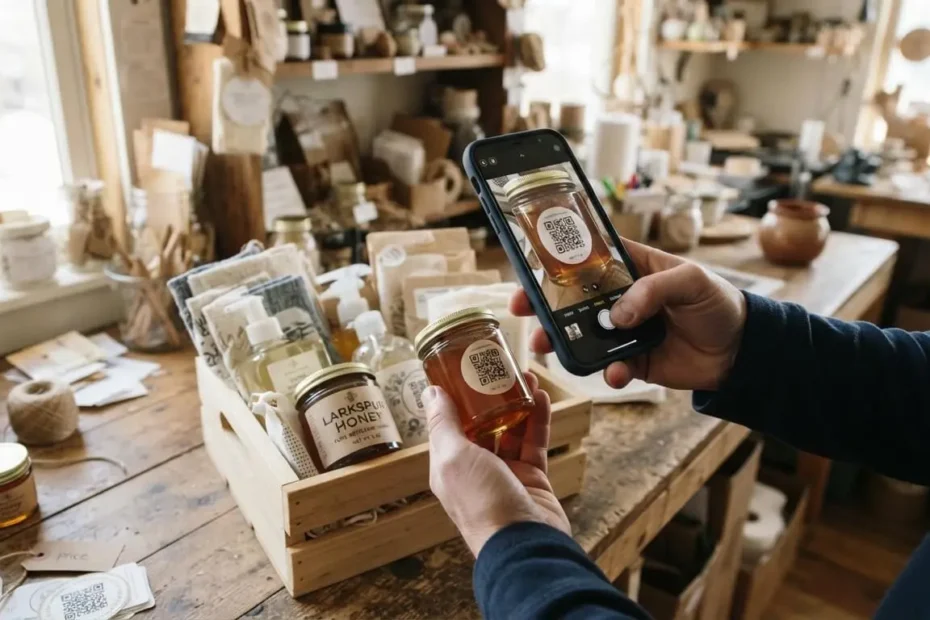
Every small business owner remembers the first time a customer messaged them asking, “Is this product even real?” It stings. You built the brand from scratch, and now someone out there is selling a copy of it. This is exactly why product verification for small business owners has become one of the fastest-growing needs in 2026 — not just for large corporations, but for every shop and brand that has something worth protecting.
Counterfeiting used to be seen as a “big brand problem.” Not anymore. Small shops are now easier targets because they usually have fewer protections in place, which is why setting up a simple authenticity check early can save years of reputation damage.
What Does Product Verification Mean for a Small Business?
In simple terms, it means giving each item a unique code that a customer can scan to confirm it’s genuine. When someone scans it, they instantly see whether the item is real, where it came from, and sometimes even its warranty status.
For a small shop, this removes all the guesswork. Customers don’t need to call support or search online forums to feel confident — they just scan and know in seconds.
Why Small Shops Need This More Than They Think
Larger companies have legal teams, monitoring agencies, and big budgets to fight fakes. Small businesses usually don’t, which makes them more exposed in the very same market.
A few reasons small shops benefit the most:
- Copycats often target smaller brands first, since enforcement is weaker there.
- One bad review calling a product “fake” can seriously hurt a small brand’s name.
- A quick authenticity check builds instant confidence with new customers who don’t know the brand yet.
- It opens a direct line between the shop and the end customer, beyond just the sale.
This is also why more small businesses now treat authenticity checks as a growth tool, not only a security measure.
How It Actually Works, Step by Step
The process is simpler than most shop owners expect:
- A unique code is generated for each product or batch.
- The code is printed on packaging, labels, or the item itself.
- The customer scans it using any smartphone camera.
- The system checks the code against its records in real time.
- The shop owner receives basic data on scan location, frequency, and unusual activity.
If one code gets scanned far more times than expected, or from a strange location, the system flags it — catching a potential copycat problem early, before it spreads.
What Small Business Owners Should Look For
Not every authentication system is built with small shops in mind. When comparing options, prioritize:
- Simple setup that doesn’t need an in-house developer.
- Duplicate scan alerts to catch fakes automatically.
- Warranty registration built in, so customers sign up instantly.
- A clear, easy dashboard to see scan activity without training.
- Pricing that fits a small budget, not enterprise-level contracts.
These points matter more for a small shop than for a large factory, since a small team needs results without hiring a dedicated department for it.
A Lighter Alternative to Enterprise Brand Protection Tools
Large enterprise platforms are usually built for global monitoring, legal takedown requests, and marketplace scanning across many countries. That level of complexity is often unnecessary — and costly — for a growing small business.
A product verification solution built around a simple scan-and-check flow gives small shops the core protection they actually need: confirming a product is real at the point of sale, without paying for tools they’ll never fully use.
What Does It Cost a Small Shop?
Pricing depends on the number of products, scan volume, and features included. Many enterprise-grade tools are priced for corporations running global operations, which puts them out of reach for a small store.
The good news is that lighter, scan-based systems — the kind covered in our guide on choosing the best brand protection provider — are usually priced per unit or as a simple subscription, which fits a small business budget far better.
Where Small Businesses Are Already Using This
This isn’t limited to one type of shop. Small and growing brands across several sectors are adopting it, including:
- Cosmetics sellers protecting their formulas from copies.
- Electronics shops verifying accessories and spare parts.
- Food and beverage stalls confirming safe, unexpired stock.
- Auto parts dealers keeping unsafe fake components off their shelves.
For a deeper breakdown by sector, see our guide on the top industries that need product authentication solutions.
How AuthX Supports Small and Growing Businesses
This is exactly the gap AuthX was built to close. Designed with growing shops in mind, AuthX gives small businesses access to a scan-to-verify system, duplicate scan alerts, and a simple dashboard — the same core protection bigger brands rely on, minus the enterprise cost and complexity. Businesses wanting the deeper mechanics behind this can read our QR code verification system breakdown.
Backed by Eyecon Consultant’s experience in digital security and customer engagement, AuthX helps small businesses protect what they’ve built, one verified scan at a time. Shops can also explore how a warranty activation system pairs naturally with authenticity checks for a smoother after-sales experience.
Common Mistakes Small Businesses Make When Protecting Their Products
Many small businesses assume that counterfeit products only affect large brands. However, this misconception can leave their products exposed to fraud. As a result, customer trust may be lost before the problem is even noticed.
In many cases, businesses rely only on attractive packaging, but packaging can easily be copied. Instead, every product should be backed by a reliable verification system that allows authenticity to be confirmed instantly. By doing so, fake products can be identified more quickly, and genuine products can be trusted with confidence.
Furthermore, delaying product protection often leads to higher costs in the future. Therefore, a verification solution should be implemented as early as possible, so that a brand’s reputation is protected while customer confidence continues to grow.
Conclusion
Product verification for small business owners is no longer just a nice-to-have — it’s how growing shops protect their name, earn customer trust, and compete confidently against copycats. If you’re ready to secure your products, book a free demo with AuthX and see how simple authenticity checks can be.
FAQs
Yes. Most scan-based systems use per-unit or subscription pricing, which fits a small business budget far better than enterprise contracts
No. Most modern tools, including AuthX, are designed for a simple setup that doesn’t require an in-house development team.
It significantly lowers the risk by making products harder to copy and easier for customers to check, but it works best alongside good supply chain habits.
Cosmetics, electronics, food and beverage, and auto parts shops see the biggest impact, though any business selling physical products can benefit.