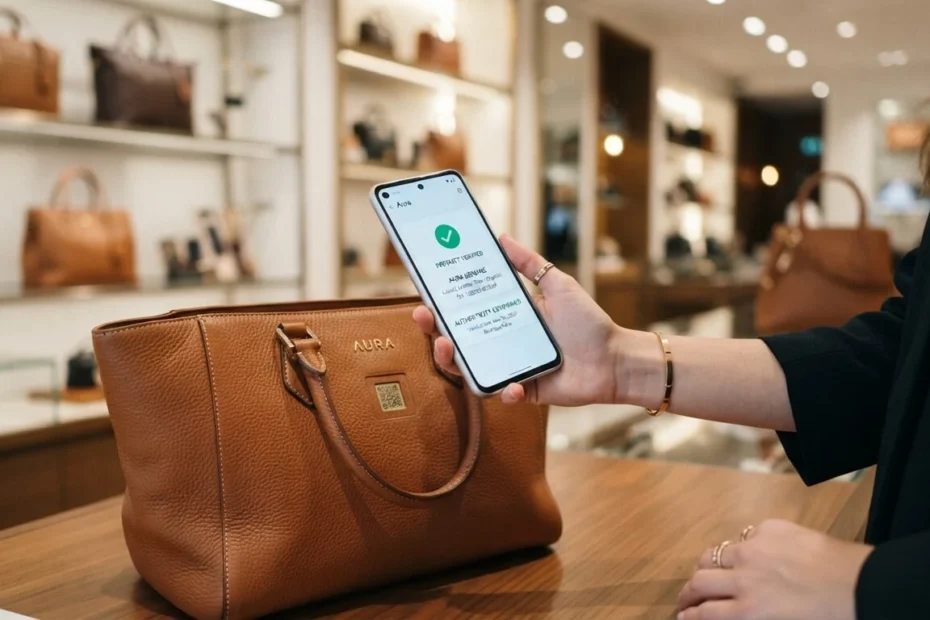
Counterfeit products have become one of the biggest challenges for manufacturers and brand owners. They not only reduce revenue but also damage customer trust and a company’s reputation. In my experience, businesses often underestimate how quickly fake products can spread through the market until customers start reporting quality issues or warranty claims for products they never manufactured.
This is where a QR Code Product Verification System makes a real difference. Instead of relying on traditional labels or holograms that can be copied, businesses can allow customers to verify product authenticity instantly by scanning a secure QR code.
What Is a QR Code Product Verification System?
A QR Code Product Verification System is a digital solution that assigns a unique QR code to every product. When customers, distributors, or retailers scan the code, the system instantly verifies whether the product is genuine.
Unlike ordinary QR codes that simply redirect users to a website, verification QR codes connect with a secure cloud database. As a result, every scan checks whether the product record exists, whether the code has already been used, and whether any suspicious activity has occurred.
From working with clients across different industries, I’ve seen that businesses often assume all QR codes provide security. However, that’s a common misconception. A secure verification system uses encrypted, unique, and non-duplicable QR codes that are linked to a centralized database.Consequently, companies gain better control over their products while customers receive instant confidence that they have purchased an authentic item.
Why Is a QR Verification System Important for Brands?
Brand protection is no longer optional. Today, counterfeit products affect industries ranging from pharmaceuticals and cosmetics to electronics, apparel, and food manufacturing.
A Brand QR Code Verification solution helps businesses address these challenges by making product authentication simple and reliable.
Some of the biggest advantages include:
- Prevents counterfeit products from entering the market.
- Builds customer confidence through instant verification.
- Supports warranty validation.
- Improves supply chain visibility.
- Strengthens brand reputation.
- Provides valuable customer engagement data.
One lesson I’ve learned from implementing authentication systems is that customers appreciate transparency. When consumers can verify a product within seconds, they naturally develop greater trust in the brand.
How Does a QR Code Product Verification System Work?
Although the technology behind product verification is sophisticated, the user experience is intentionally simple.
Step 1: Generate a Unique QR Code
Each product receives a unique and secure QR code during manufacturing or packaging. This code is linked to a specific product record in the verification database.
Step 2: Apply the QR Code
The QR code is printed on product packaging, labels, warranty cards, or security seals.
Because every code is unique, counterfeiters cannot simply duplicate one code across thousands of fake products without triggering alerts.
Step 3: Customer Scans the Code
After purchasing the product, the customer scans the QR code using their smartphone.
The system immediately checks the database to verify authenticity.
Step 4: Instant Verification
Within seconds, customers receive confirmation such as:
- Genuine Product
- Product Already Verified
- Invalid QR Code
- Suspicious Product Detected
Additionally, businesses can customize the verification page to display product information, warranty details, promotional offers, or customer support options.
Step 5: Analytics and Monitoring
Every verification request is recorded in real time.
As a result, businesses can monitor:
- Scan locations
- Verification frequency
- Customer engagement
- Distribution patterns
- Potential counterfeit hotspots
This valuable data supports both marketing and brand protection strategies.
Comparison: Traditional Authentication vs QR Code Verification
| Feature | Traditional Labels | QR Code Product Verification System |
|---|---|---|
| Security | Easy to copy | Highly secure |
| Verification | Manual | Instant |
| Customer Experience | Limited | Interactive |
| Product Tracking | Difficult | Real-time |
| Analytics | Not available | Comprehensive |
| Counterfeit Detection | Low | High |
| Warranty Integration | Manual | Automated |
| Brand Engagement | Minimal | Excellent |
Best Practices for Implementing a QR Verification System
Deploying a verification solution involves more than printing QR codes. To maximize its value, businesses should follow proven industry practices.
Use Unique and Encrypted QR Codes
Every product should have a unique QR code rather than using the same code across an entire product line.
This approach significantly improves security and makes cloning much more difficult.
Choose Reliable Product Verification Software
Invest in Product Verification Software that offers cloud-based management, real-time verification, and detailed analytics.
A scalable solution can grow with your business while supporting future integrations.
Educate Customers
Many customers are unaware that product verification is available.
Therefore, include clear instructions on product packaging encouraging buyers to scan the QR code before use.
Monitor Verification Analytics
Every scan provides valuable business intelligence.
Review reports regularly to identify:
- Unusual scanning patterns
- High-risk regions
- Customer engagement trends
- Distribution performance
These insights can support both marketing and anti-counterfeiting efforts.
Integrate with Existing Systems
For maximum efficiency, connect your QR Code Authentication System with ERP, inventory, CRM, or warranty management software.
This integration reduces manual work while improving operational accuracy.
FAQs
A QR Code Product Verification System allows customers and businesses to verify whether a product is genuine by scanning a unique QR code linked to a secure database.
Each product receives a unique QR code that cannot be easily duplicated. When scanned, the system checks authenticity instantly and can detect suspicious or repeated verification attempts.
Industries such as pharmaceuticals, cosmetics, electronics, food and beverages, apparel, automotive parts, and consumer goods benefit significantly from product authentication systems.
Yes. Customers feel more confident purchasing products they can verify instantly. This transparency strengthens brand loyalty and improves the overall buying experience.
Absolutely. Modern cloud-based verification platforms are scalable, making them suitable for startups, SMEs, and large enterprises alike.
Yes. Most advanced QR Code Verification Software solutions support integration with ERP systems, POS software, inventory management platforms, and warranty management solutions.
Conclusion
A QR Code Product Verification System is more than just a tool for verifying products—it helps businesses prevent counterfeiting, protect their brand reputation, and build customer trust. As counterfeit products continue to grow across industries, investing in a secure product authentication solution is becoming essential rather than optional. By implementing the right verification system, brands can improve transparency, strengthen customer confidence, and stay ahead of evolving market challenges.
Ready to Protect Your Brand?
AuthX offers a reliable QR Verification System for Brands that helps businesses authenticate products, prevent counterfeiting, and improve customer trust. If you’re looking for a secure and scalable product verification solution, visit Authx to learn how AuthX can help safeguard your brand.