Counterfeit products have become one of the biggest challenges for manufacturers, retailers, and consumers worldwide. From electronics and pharmaceuticals to cosmetics and luxury goods, fake products damage brand reputation, reduce customer trust, and lead to significant financial losses. Therefore, businesses need a smarter way to prove their products are genuine.
This is where QR Code Product Verification has transformed the industry. Instead of relying on traditional labels or printed serial numbers that can easily be copied, businesses now use secure QR codes that instantly verify product authenticity. In my experience working with businesses implementing digital verification systems, companies that adopt QR authentication not only reduce counterfeit risks but also strengthen customer confidence and improve after-sales engagement.
If you’re looking to protect your brand and help customers verify genuine products within seconds, understanding how QR code verification works is no longer optional—it’s becoming an essential business strategy.
Why Fake Products Continue to Grow
Counterfeiters have become more sophisticated over the years. They no longer create obvious copies with poor packaging. Instead, many fake products closely resemble genuine ones, making it difficult for customers and even retailers to identify the difference.
I’ve seen many businesses assume premium packaging alone can prevent counterfeiting. Unfortunately, that’s rarely enough. Modern counterfeiters can duplicate labels, holograms, and even warranty cards with surprising accuracy.
Several factors contribute to counterfeit product growth:
- Increasing online shopping
- Global supply chains
- Easy access to printing technologies
- Weak product tracking systems
- Lack of customer awareness
Consequently, brands need digital verification methods that are much harder to duplicate.
What is QR Code Product Verification?
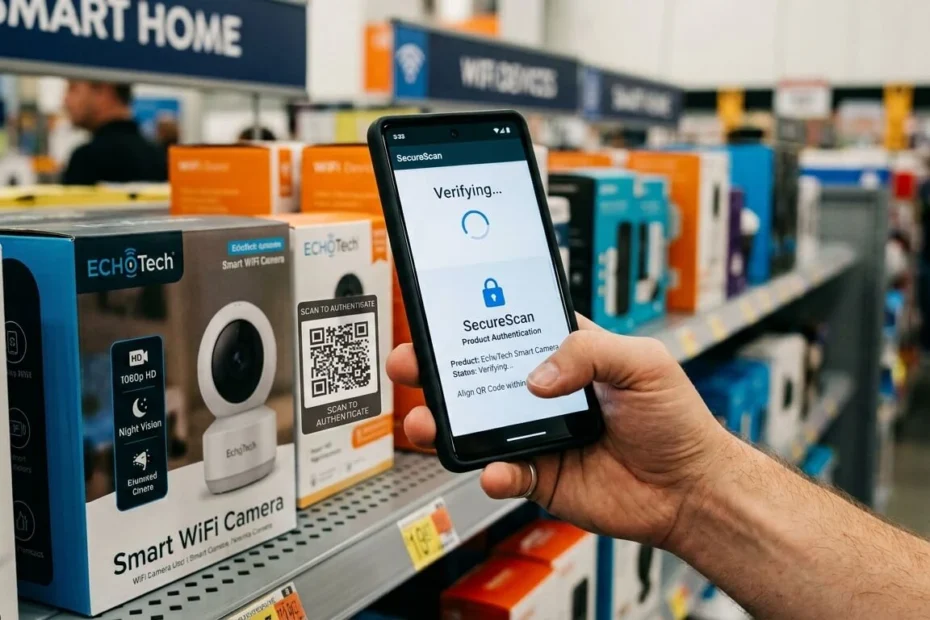
QR Code Product Verification is a digital authentication process that allows customers, distributors, or retailers to scan a unique QR code using a smartphone. The system then checks the product information stored in a secure database and instantly confirms whether the product is genuine.
Unlike ordinary QR codes that simply redirect users to a website, a professional QR code authentication system uses encrypted product records, unique identifiers, and secure databases to prevent duplication.
Based on real implementation experience, businesses often combine QR authentication with:
- Unique serial numbers
- Cloud databases
- Product registration
- Digital warranty activation
- Customer verification history
As a result, every scan becomes part of the product’s digital identity.
How QR Code Product Authentication Works
Although the process appears simple to customers, a secure product verification system operates through multiple layers of protection.
The typical workflow includes:
- A unique QR code is generated for every product.
- The code is securely stored in the manufacturer’s database.
- The QR code is printed on product packaging.
- Customers scan the code using their smartphone.
- The verification platform checks the encrypted product record.
- The customer instantly receives the authentication result.
Furthermore, advanced systems also record:
- Scan location
- Scan time
- Number of verification attempts
- Device information
- Product registration status
This additional data helps businesses identify suspicious activities and counterfeit distribution networks.
QR Code Verification vs Traditional Authentication
| Feature | Traditional Labels | QR Code Product Verification |
|---|---|---|
| Easy for customers | Limited | Very Easy |
| Real-time verification | No | Yes |
| Duplicate detection | Difficult | Instant |
| Product history | No | Available |
| Customer engagement | Minimal | High |
| Digital warranty | Not supported | Supported |
| Brand protection | Limited | Strong |
From working with clients, I’ve found that businesses switching from printed authentication methods to QR verification experience significantly fewer counterfeit-related customer complaints.
Benefits of Using an Anti-Counterfeit QR Code
Implementing an Anti-counterfeit QR code offers advantages beyond simply identifying fake products.
Stronger Brand Protection
Counterfeit products directly affect customer trust. Therefore, authenticating products digitally helps preserve your brand reputation.
Better Customer Confidence
Customers appreciate transparency. When buyers can verify genuine products within seconds, they feel more confident about their purchase.
Improved Supply Chain Visibility
Every product scan generates valuable tracking information. Consequently, manufacturers can identify unusual distribution patterns.
Digital Warranty Integration
Many businesses combine product verification with warranty registration. This creates a seamless customer experience while reducing fake warranty claims.
Actionable Business Insights
One overlooked advantage is customer behavior data. Businesses can understand where products are being scanned, which regions have higher counterfeit risks, and how customers interact with products after purchase.
Step-by-Step Guide to Detect Fake Products
Businesses often ask how customers should actually verify products. The process is surprisingly simple.
Step 1: Locate the QR Code
Check the product packaging for the official verification QR code.
Step 2: Scan Using Your Smartphone
Use your phone camera or the official verification application.
Step 3: Wait for Authentication
The product verification system compares the QR code against the manufacturer’s secure database.
Step 4: Review the Verification Result
A genuine product usually displays:
- Product details
- Manufacturing information
- Registration status
- Warranty information
- Authentication confirmation
However, if the QR code has already been scanned multiple times or does not exist in the database, the system may flag the product as suspicious.
Step 5: Report Suspicious Products
If verification fails, customers should immediately contact the manufacturer instead of using the product.
Best Practices for Businesses
After helping companies implement QR authentication systems, I’ve noticed that successful businesses follow several important practices.
First, generate a completely unique QR code for every product instead of using a single code across an entire product line.
Second, encrypt all product identifiers to prevent cloning.
Third, monitor scan analytics regularly to detect unusual verification patterns.
Additionally, educate customers about verifying products before purchase.
Finally, integrate verification with digital warranty registration to increase customer engagement while reducing fraud.
These practices significantly improve counterfeit product prevention.
Common Mistakes Businesses Make
One common mistake companies make is assuming any QR code can provide security. In reality, a basic QR code linking to a webpage offers very little protection.
Other common mistakes include:
- Reusing identical QR codes
- Not encrypting product information
- Ignoring scan analytics
- Failing to educate customers
- Using outdated verification databases
- Not updating authentication records
I’ve seen businesses invest heavily in packaging while overlooking digital verification. Unfortunately, counterfeiters usually exploit exactly these weaknesses.
Why QR Verification is Becoming an Industry Standard
Consumers today expect instant information. Likewise, businesses need better ways to protect their products.
QR-based authentication has become increasingly popular because it combines security, convenience, and customer engagement in one solution.
Moreover, governments, manufacturers, retailers, and distributors are increasingly adopting digital product authentication to improve supply chain transparency.
As counterfeit operations become more advanced, relying solely on printed labels is no longer enough. Instead, digital authentication provides an additional layer of trust that both businesses and consumers can rely on.
FAQs
Yes. When implemented correctly using encrypted databases and unique product identifiers, it is one of the most reliable methods for product authenticity verification.
They can copy visible QR images, but secure verification systems detect duplicates, invalid scans, and suspicious authentication attempts.
Pharmaceuticals, electronics, cosmetics, automotive parts, FMCG, luxury goods, food products, and consumer electronics all benefit significantly.
Not always. Many verification systems work directly through smartphone cameras or mobile web browsers.
Absolutely. Many businesses activate product registration and digital warranty immediately after successful verification.
It helps customers verify genuine products instantly, reduces counterfeit sales, builds trust, and provides valuable scan analytics for identifying fraudulent distribution channels.
Conclusion
As counterfeit products continue to evolve, businesses must adopt smarter ways to protect both their customers and their brand reputation. QR Code Product Verification offers a reliable, scalable, and user-friendly solution that enables instant authentication, strengthens customer trust, and supports long-term brand protection. If you’re looking to implement a secure product verification system tailored to your business, EyeconConsultant can help. Visit Authx to discover how Eyecon Consultant’s advanced QR code authentication and digital verification solutions can safeguard your products, prevent counterfeiting, and deliver a seamless verification experience for your customers.